



Heart Failure
A patient guide to heart failure symptoms, ejection fraction, diagnostic tests, medicines, devices and long-term monitoring.
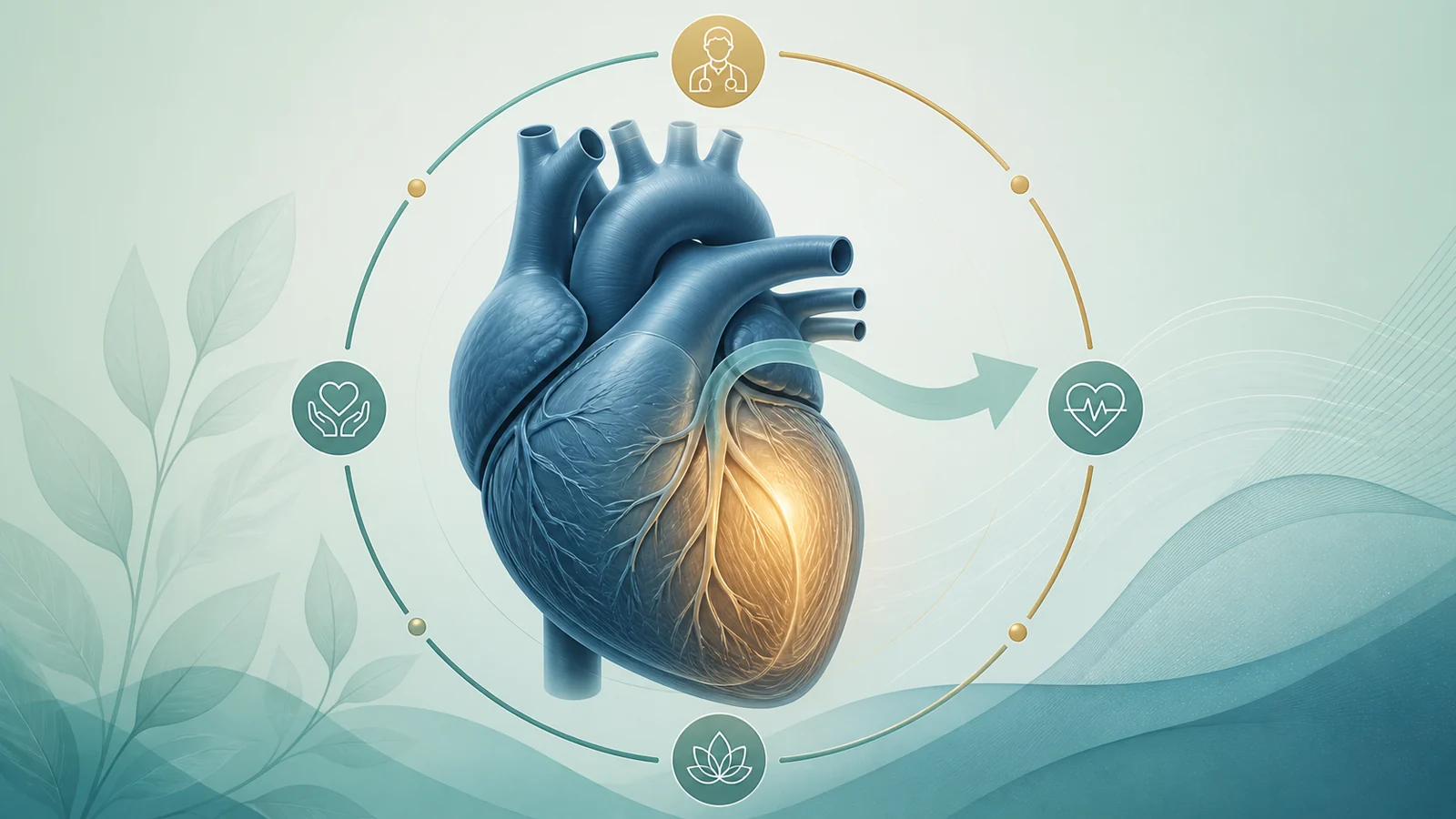
Heart failure means that the heart cannot fill or pump well enough to meet the needs of the body without increased pressure inside the heart. It does not mean that the heart has stopped. The condition may develop when the pumping strength is reduced, when the heart is stiff despite a preserved ejection fraction, or through an intermediate pattern.
Key Points
Heart failure is a clinical syndrome rather than a single disease. Coronary artery disease, long-standing high blood pressure, valve disease, cardiomyopathy, rhythm disorders and other conditions may contribute. Identifying the underlying cause is essential because treatment and prognosis depend on both the type of heart failure and the associated disease.
Symptoms and Signs
- Shortness of breath during activity, when lying flat or at night
- Reduced exercise capacity and unusual fatigue
- Swelling of the ankles, legs or abdomen
- Rapid weight gain from fluid retention
- Persistent cough, reduced appetite, dizziness or palpitations
Symptoms alone are not specific. Lung disease, anaemia, kidney disease and other conditions can produce similar complaints.
Diagnosis
Assessment includes the medical history, physical examination, ECG and blood tests. Natriuretic peptides may support the diagnosis, while echocardiography evaluates ejection fraction, chamber size, valves and pressures. Coronary assessment, rhythm monitoring, cardiac MRI or genetic evaluation may be appropriate in selected patients.
Treatment
Treatment aims to improve symptoms, reduce hospital admissions and prolong life where evidence supports this. The plan may combine several medicine groups, adjusted to blood pressure, kidney function, potassium level and the type of heart failure. Diuretics can reduce congestion but require monitoring. Coronary or valve treatment may be required when an underlying structural problem is important.
Some patients with reduced ejection fraction and specific ECG features may benefit from cardiac resynchronisation therapy. An implantable cardioverter defibrillator may be considered when the risk of dangerous ventricular arrhythmia remains high. These devices are not suitable for every patient and do not replace guideline-directed medicine.
Daily Monitoring
Patients may be advised to monitor weight, swelling, breathlessness, blood pressure and pulse. A sudden weight increase can indicate fluid retention. Salt and fluid advice should be individualised rather than applied as a rigid rule to everyone. Medicines should not be stopped because symptoms improve; improvement often means that treatment is working.
When to Seek Emergency Help
Contact the healthcare team promptly for a rapid increase in swelling or weight, increasing need to sleep upright, or a clear reduction in daily capacity.
Frequently Asked Questions
Is heart failure the same as a heart attack?
No. A heart attack can cause heart failure, but heart failure has many possible causes.
Can ejection fraction improve?
Yes, in some patients it improves with treatment. Follow-up remains important even when the measurement recovers.
Should all patients restrict fluids?
No. Fluid advice depends on congestion, sodium level, kidney function, weather and other clinical factors.