



Pacemaker Implantation
Why a pacemaker may be needed, how it is implanted, possible risks, device checks and everyday life after the procedure.
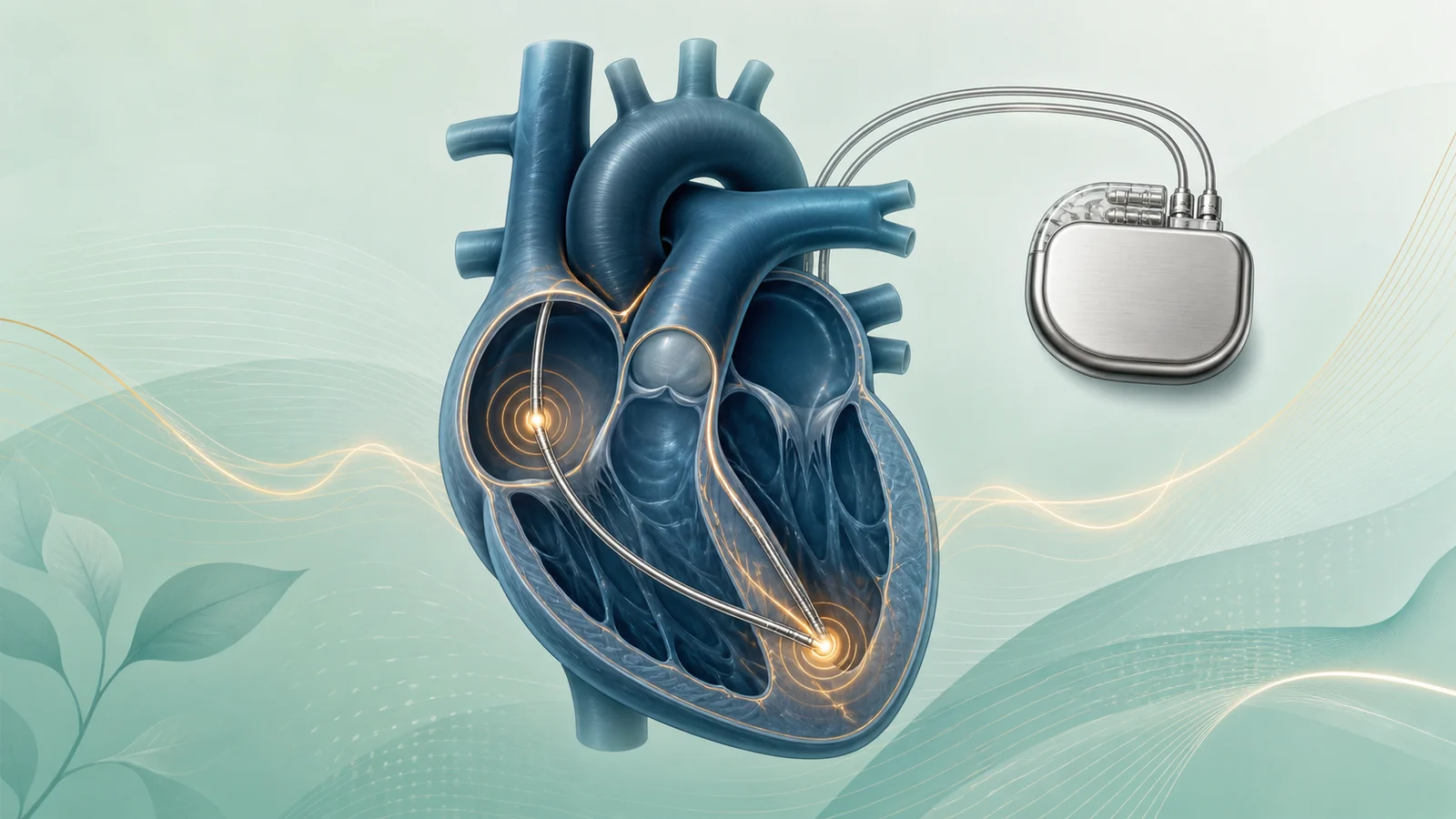
A pacemaker is a small implanted device that monitors the heartbeat and delivers electrical impulses when the heart is too slow or conduction is interrupted. It does not continuously force the heart to beat at one fixed rate; modern devices respond according to programmed settings and the rhythm detected.
Who May Need a Pacemaker?
Common indications include symptomatic sinus-node disease, advanced atrioventricular block and selected conduction disorders. The decision is based on the documented rhythm and its relationship to symptoms such as fainting, near-fainting, fatigue or exercise intolerance. A slow pulse alone does not always require implantation, particularly in trained athletes or during sleep.
Before Implantation
Evaluation may include ECG, rhythm monitoring, blood tests and echocardiography. The team reviews infection, bleeding risk and all medicines, including anticoagulants. The most appropriate system may be single-chamber, dual-chamber, leadless or a device designed for resynchronisation; selection depends on rhythm, heart function, venous anatomy and anticipated pacing needs.
How Is It Implanted?
Most conventional pacemakers are placed under the skin below the collarbone. Leads are advanced through a vein into the heart and connected to the generator. Local anaesthetic and sedation are commonly used. A leadless pacemaker is delivered through a catheter into the heart in selected patients and does not use a chest pocket or conventional transvenous lead.
Risks
Possible complications include bleeding, infection, collapsed lung, lead movement, vein blockage, fluid around the heart and device or lead malfunction. The team balances these risks against the consequences of untreated slow rhythm. Antibiotics and sterile technique reduce infection risk.
After the Procedure
The wound and device are checked before discharge. Arm and activity restrictions vary with the implantation method and should follow the individual discharge plan. Device follow-up measures battery status, lead function and recorded rhythm events. Remote monitoring may supplement clinic visits but does not replace urgent evaluation when symptoms occur.
Everyday Life
Most household appliances are safe when used normally. Patients receive a device identification card and should mention the pacemaker before MRI, surgery or procedures using electrical equipment. Many modern systems are MRI-conditional, but scanning requires confirmation of the complete system and an appropriate protocol. Driving restrictions depend on the reason for implantation and local regulations.
When to Seek Urgent Help
Prompt review is also needed for fever, increasing redness, discharge, wound opening or swelling over the device pocket.
Frequently Asked Questions
How long does a pacemaker battery last?
Battery life varies with device type and pacing use and is estimated during each check. Generator replacement is planned before depletion.
Can I have an MRI?
Often yes with an MRI-conditional system and a dedicated protocol, but the exact generator and leads must be checked first.
Does a pacemaker treat every arrhythmia?
No. Its main role is treating slow rhythms. Other rhythm disorders may require medicines, ablation or a defibrillator.