



Cardiac Resynchronisation Therapy (CRT)
How CRT coordinates ventricular contraction in selected heart-failure patients, candidate assessment, implantation and follow-up.
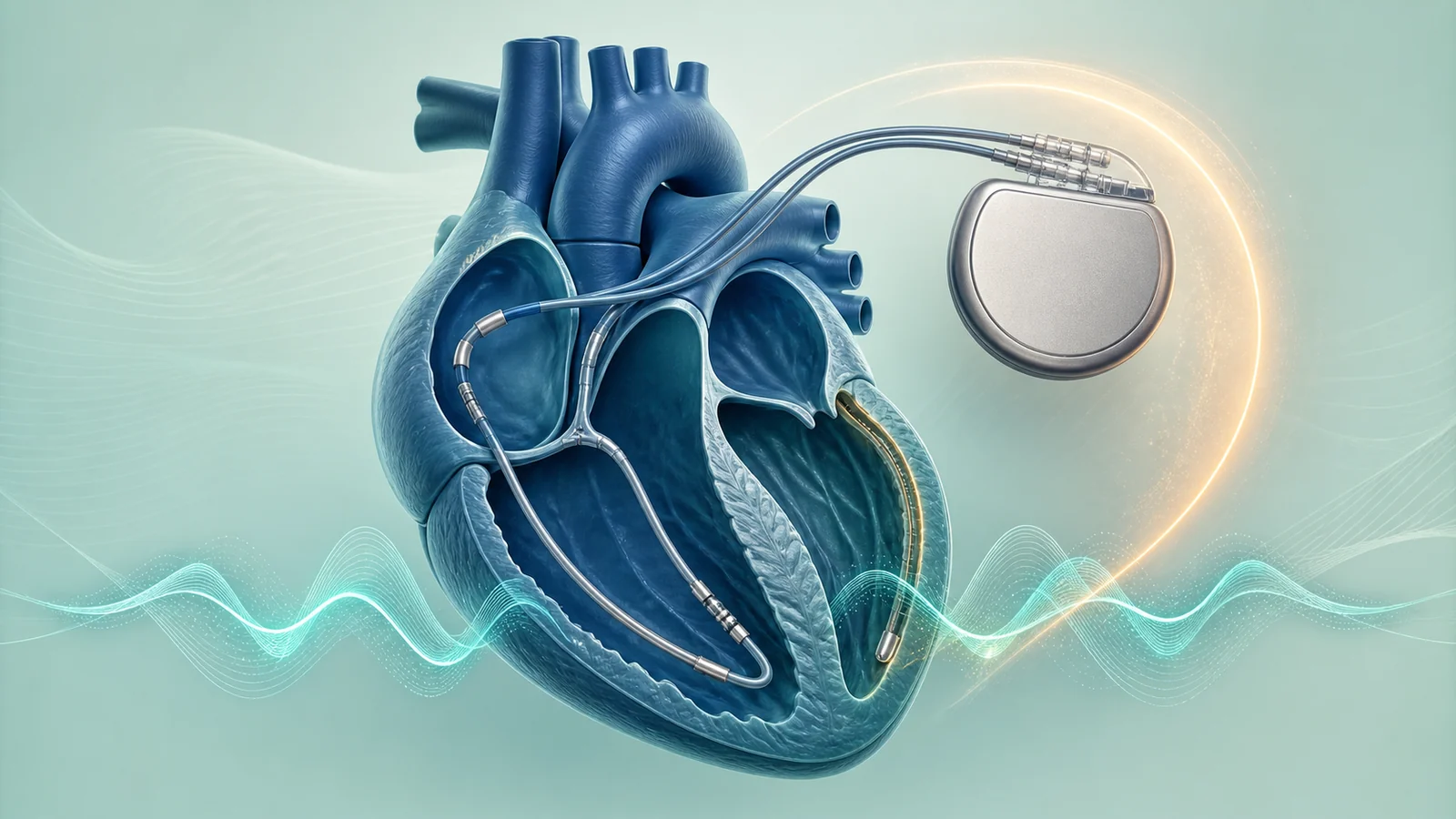
Cardiac resynchronisation therapy, or CRT, is a specialised pacing treatment for selected patients with heart failure and delayed electrical activation of the ventricles. By pacing the heart from more than one site, CRT can improve the coordination of contraction. In appropriate patients this may improve symptoms, heart function and outcomes.
Who May Be a Candidate?
CRT is not determined by ejection fraction alone. Assessment includes persistent symptoms despite guideline-directed medical treatment, the QRS duration and pattern on ECG, heart rhythm, anatomy, expected pacing requirement and other illnesses. Benefit is generally strongest in well-defined groups with reduced ejection fraction and left bundle branch block, while suitability is more individual in other patterns.
CRT-P and CRT-D
CRT-P provides resynchronisation pacing. CRT-D combines resynchronisation with an implantable defibrillator capable of treating life-threatening ventricular rhythms. Choosing between them requires evaluation of sudden-death risk, age, other diseases, expected survival, potential complications and patient preferences.
Before and During Implantation
The team reviews symptoms, ECG, echocardiography, coronary and valve disease, kidney function, infection and medicines. In a conventional system, leads are placed in the right side of the heart and a vein on the outer surface of the left ventricle. Alternative pacing approaches may be considered when standard placement is not possible or appropriate. Local anaesthetic with sedation is common, although the plan varies.
Benefits and Limitations
Some patients experience better exercise capacity, fewer heart-failure admissions and reverse remodelling of the heart. Response is not identical in everyone. Lead position, scar tissue, rhythm, programming and adherence to medical treatment can affect benefit. CRT complements rather than replaces evidence-based heart-failure medication.
Risks
Risks include bleeding, infection, collapsed lung, lead movement, vein injury, stimulation of the diaphragm and failure to position the left-ventricular lead. CRT-D systems may also deliver inappropriate shocks. Individual risks and alternatives are discussed during informed consent.
Follow-up
Device checks evaluate battery, leads, pacing percentage and rhythm events. Programming may be adjusted, and echocardiography can assess response. Remote monitoring may support follow-up. Worsening symptoms still require clinical evaluation even when device measurements appear normal.
When to Seek Urgent Help
Fever, wound discharge, progressive redness or swelling over the device also needs prompt review.
Frequently Asked Questions
Is CRT suitable for every person with heart failure?
No. ECG findings, ejection fraction, symptoms, rhythm and response to medicine determine suitability.
When can improvement be expected?
Symptoms may change over weeks to months. Clinical review, device data and echocardiography are used together.
Can CRT replace heart-failure medicines?
No. It is generally used in addition to optimised medical therapy.