



Coronary Stent Treatment
How coronary stents restore blood flow, when they may be appropriate, the role of antiplatelet treatment and recovery after PCI.
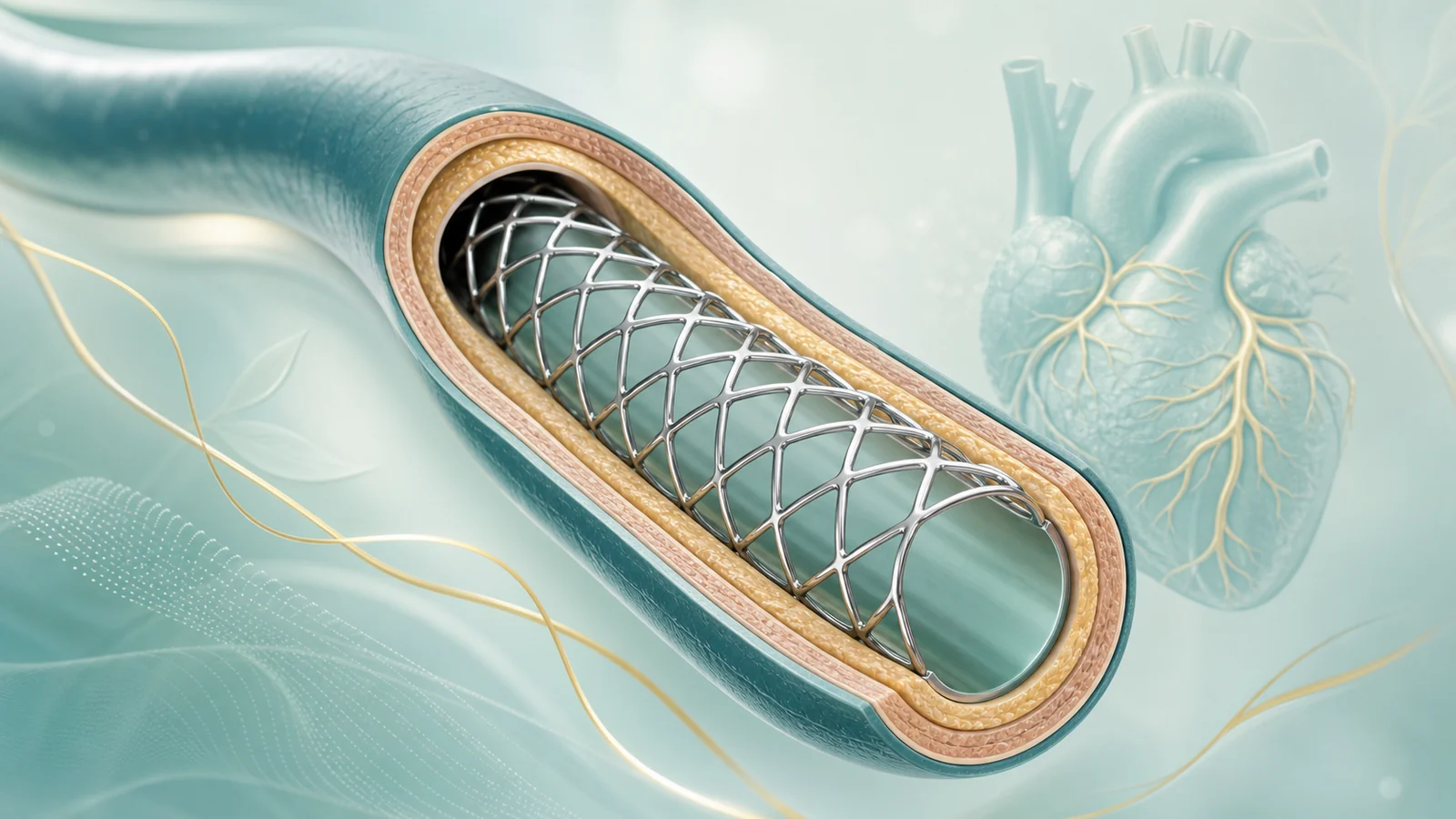
A coronary stent is a small mesh tube placed inside a narrowed coronary artery during percutaneous coronary intervention, or PCI. A balloon expands the narrowed segment and the stent supports the vessel wall to improve blood flow. Most modern coronary stents release medicine that reduces excessive tissue growth inside the treated segment.
When May a Stent Be Considered?
Urgent PCI can reopen an artery during many heart attacks. In chronic coronary disease, stenting may be considered for symptoms that continue despite appropriate medicine or for selected high-risk anatomical findings. Not every narrowing benefits from a stent. Symptoms, the amount of heart muscle at risk, physiological measurements, coronary anatomy, diabetes, heart function and suitability for bypass surgery are considered together.
Planning the Procedure
The team reviews kidney function, bleeding risk, allergies and all medicines. Antiplatelet treatment is essential around the procedure, but the combination and duration depend on the reason for PCI, stent type and individual bleeding and clotting risks. Patients must not stop these medicines without medical advice.
How Is a Stent Placed?
A catheter is introduced through the wrist or groin. A guidewire crosses the narrowing, followed by balloons and the stent. High-pressure balloon expansion helps the stent sit against the artery wall. IVUS or OCT may be used to assess vessel size, plaque and stent expansion. Complex disease can require additional techniques, and some lesions are better treated with bypass surgery.
Risks and Limitations
Possible risks include access-site bleeding, contrast-related kidney injury, artery damage, heart attack, stroke, rhythm problems and an allergic reaction. A clot can rarely form inside a stent, particularly if antiplatelet treatment is interrupted. Restenosis can occur, although it is less common with current drug-eluting stents. A stent treats a particular narrowing; it does not remove the underlying atherosclerotic disease.
Recovery and Long-term Care
Activity and wound-care instructions depend on the access route and complexity of the procedure. Long-term care includes taking prescribed antiplatelet and other cardiovascular medicines, stopping tobacco, controlling LDL cholesterol, blood pressure and diabetes, regular appropriate activity and cardiac rehabilitation when recommended.
When to Seek Emergency Help
Urgent advice is also needed for uncontrolled access-site bleeding, rapidly increasing swelling, or a cold, numb or discoloured hand or leg.
Frequently Asked Questions
Does a stent cure coronary artery disease?
No. It treats a selected narrowing. Risk-factor control and medicines remain important.
Can antiplatelet medication be stopped for dental work or surgery?
Do not stop it independently. The cardiology and procedural teams should coordinate the safest plan.
Is bypass surgery sometimes preferable?
Yes. Extensive or complex disease, diabetes, left-main involvement and other anatomical or clinical features may favour bypass surgery after Heart Team review.