


Implantable Cardioverter Defibrillator (ICD)
How an ICD detects and treats dangerous ventricular rhythms, who may benefit, implantation, shocks and long-term follow-up.
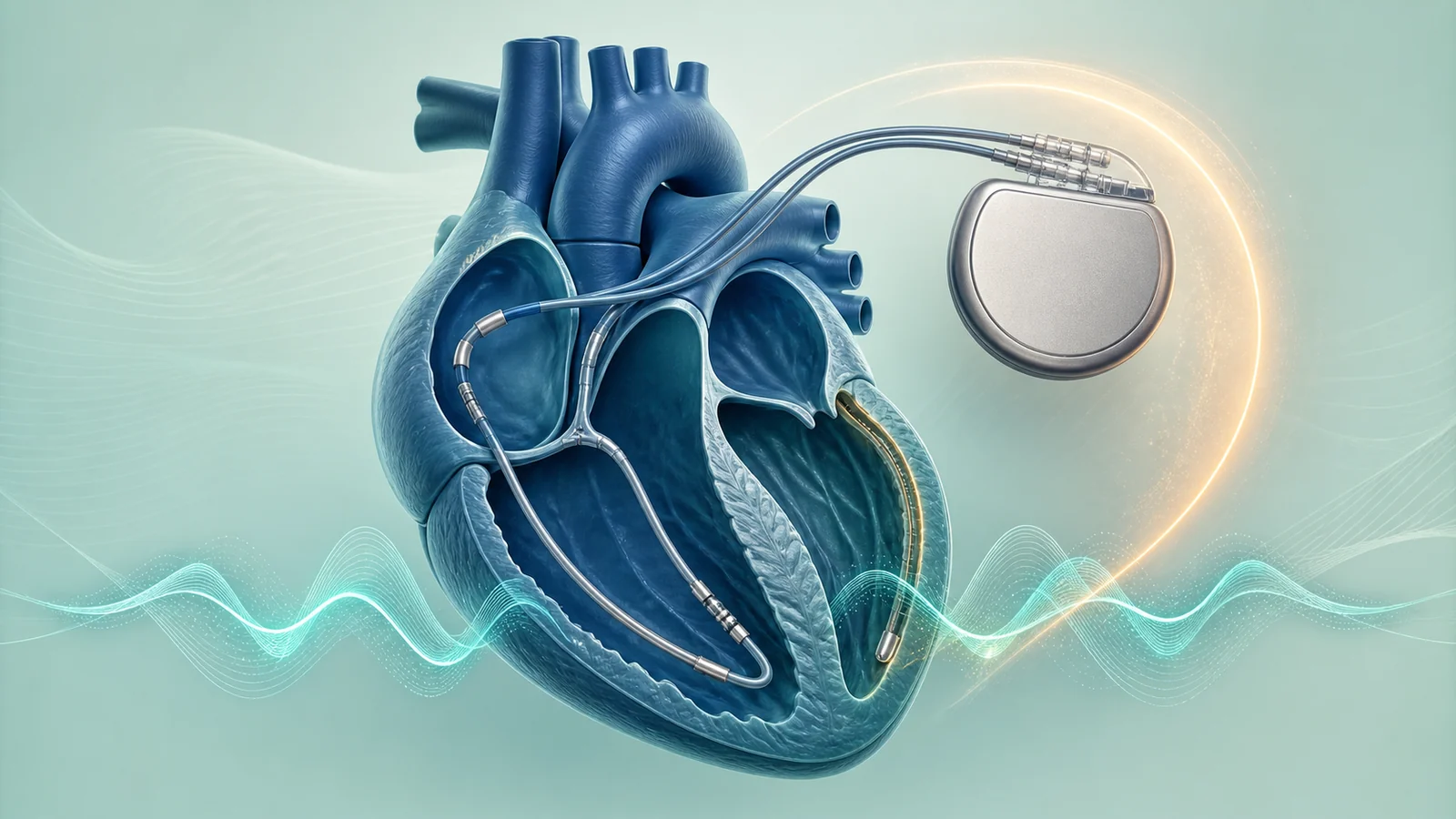
An implantable cardioverter defibrillator, or ICD, continuously monitors the heart rhythm. When it detects a dangerous ventricular tachycardia or ventricular fibrillation, it can deliver rapid pacing or an electrical shock to restore a safer rhythm. Many ICDs can also provide standard pacing for a slow heartbeat.
Who May Benefit?
An ICD may be recommended after survival of cardiac arrest or a sustained dangerous ventricular arrhythmia when a reversible cause is not responsible. It may also be considered to prevent sudden cardiac death in selected patients with persistently reduced heart function or specific inherited and structural heart diseases. The decision considers expected benefit, competing illnesses, life expectancy, medicine optimisation and patient preferences.
Before Implantation
Assessment includes the arrhythmia history, ECG, heart function, imaging and current treatment. Reversible causes such as acute ischaemia, electrolyte disturbance or a temporary illness must be addressed. The team discusses the type of system, including transvenous or subcutaneous ICD, and whether cardiac resynchronisation is also indicated.
Implantation
A conventional ICD generator is placed under the skin below the collarbone and connected to one or more leads in the heart. A subcutaneous ICD places its lead under the skin rather than inside the heart and may be suitable when pacing is not required. Anaesthesia and testing are tailored to the patient and system.
Shocks and Device Programming
The device uses programmed zones and algorithms to distinguish dangerous rhythms. Anti-tachycardia pacing can terminate some rhythms without a shock. A shock may be lifesaving but can be painful and distressing. Modern programming aims to reduce unnecessary therapy while preserving safety. A shock should be reported according to the individual action plan.
Risks and Follow-up
Possible complications include bleeding, infection, collapsed lung, lead displacement or failure, inappropriate shocks and psychological distress. Follow-up checks the battery, leads, detected rhythms and delivered treatments. Remote monitoring can alert the clinic to selected events. Heart-failure and antiarrhythmic treatment remain important; an ICD does not prevent all arrhythmias or correct the underlying disease.
Everyday Life
Patients receive a device card and guidance about driving, travel, work, sport and electromagnetic equipment. MRI may be possible with a compatible system and protocol. Strong magnets should not be placed over the device. End-of-life preferences and possible deactivation of shock therapy can be discussed compassionately when clinical circumstances change.
When to Seek Emergency Help
Follow the personalised plan after a single shock when otherwise well, and contact the device team promptly. Fever, wound discharge or progressive pocket swelling also needs urgent review.
Frequently Asked Questions
Is an ICD the same as a pacemaker?
No. Both can pace, but the ICD is designed to detect and treat life-threatening fast ventricular rhythms.
Can a shock occur while I am conscious?
Yes. It may be painful. Device review determines whether the treatment was appropriate and whether programming or medicine should change.
Does an ICD remove the need for medication?
No. Medicines and treatment of the underlying heart condition usually continue.